
Teyleten Robot LM2596 Buck Converter w/ LED Voltmeter (5-Pack)
Adjustable 4–40V → 1.25–37V regulators with a built-in voltmeter — dial in 6V for your servos.
Best for: A clean 5–6V servo rail

by ALITOVE
★ Best for: Separate power rail for 4–6 servos
A dedicated 5V, 10A servo supply — the fix for arms that brown out and reset the Arduino.
Opens Amazon in a new tab — current price & reviews are shown there.
As an Amazon Associate we earn from qualifying purchases. Prices and availability are accurate as shown on Amazon at the time of purchase.
Most robotic arm resets are power problems, and the fix is a supply that feeds the servos directly instead of the microcontroller. A 5V 10A adapter has the headroom for several MG996R-class servos moving at once, which is exactly the case a small USB or 2A supply cannot handle. Wire its output to the V+ and GND screw terminal of a PCA9685 driver (a barrel-jack-to-screw-terminal adapter makes this tidy) and tie that ground to the Arduino's ground. Size against your servos' combined stall current: for six high-torque servos under heavy load, check whether 10A leaves enough margin.
| Output | 5V DC, 10A (50W) |
|---|---|
| Input | 100–240V AC |
| Plug | 5.5 × 2.5 mm barrel |
ALITOVE 5V 10A Power Supply Adapter (50W)
See the current price, stock and reviews on Amazon.
Pick the right robotic arm power supply, size current from servo stall draw, wire a common ground, and stop brownouts that reset your Arduino or Pi.
Code & electronicsA clear robotic arm wiring diagram: how to connect servos, a PCA9685 driver, the controller and a separate power supply — with the grounding rule that makes it work.
Code & electronicsFixes for the most common DIY robotic arm problems — servo jitter, weak grip, Arduino resets, drifting joints, and I2C errors — organized by symptom.
Parts & hardwareA practical guide to choosing servo motors for a DIY robotic arm — how to calculate torque, SG90 vs MG996R vs serial bus servos, and how to power them without jitter or resets.
Adjustable 4–40V → 1.25–37V regulators with a built-in voltmeter — dial in 6V for your servos.
Best for: A clean 5–6V servo rail
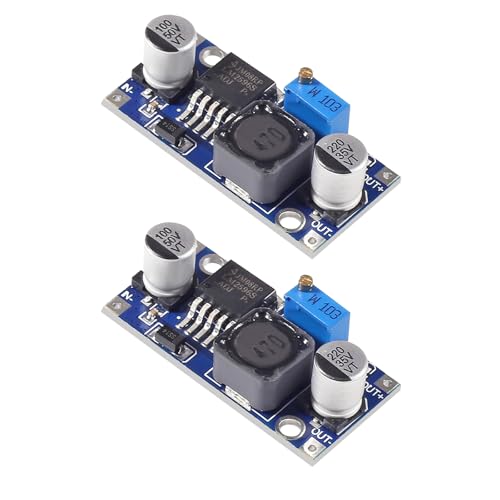
Simple, cheap step-down modules to drop a 12V supply to servo-safe voltage.
Best for: Budget voltage regulation

Includes the 1000µF capacitors that stop servo current spikes from resetting your board.
Best for: Smoothing the servo power rail
ALITOVE 5V 10A Power Supply Adapter (50W)
Check Price on Amazon