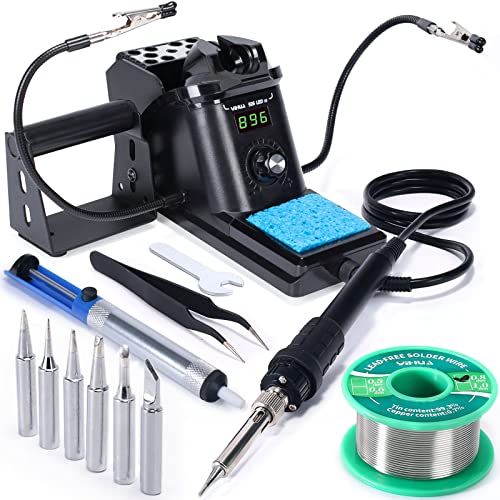
YIHUA 926 III Soldering Station Kit
Temperature-controlled station with helping hands, spare tips and a solder sucker — a proper bench setup.
Best for: A reliable home bench
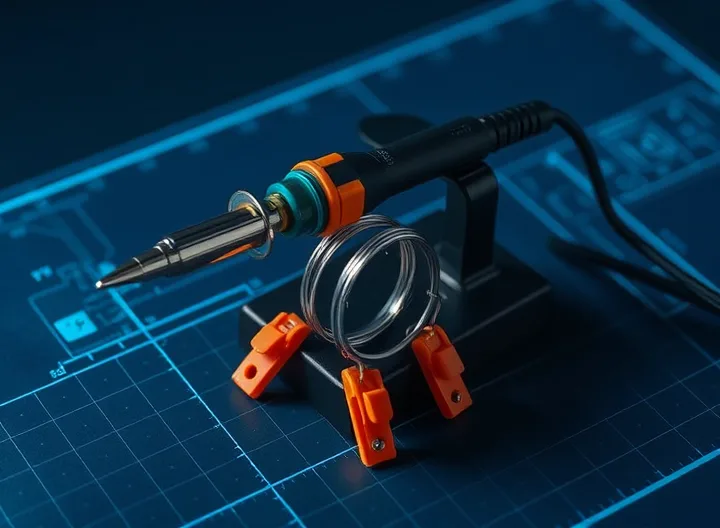
Breadboards are great for prototyping, but a robotic arm that actually moves will shake jumper wires loose. Soldering your final connections — and the header pins on driver boards — is what makes a build dependable. A temperature-controlled iron or a small station with helping hands covers everything a maker needs, from tinning servo leads to attaching a PCA9685’s terminals.
As an Amazon Associate we earn from qualifying purchases. Prices and availability are accurate as shown on Amazon at the time of purchase.
Temperature-controlled station with helping hands, spare tips and a solder sucker — a proper bench setup.
Best for: A reliable home bench

Adjustable 200–450°C iron with tips, solder and tools — a low-cost way to get soldering.
Best for: First-time / budget
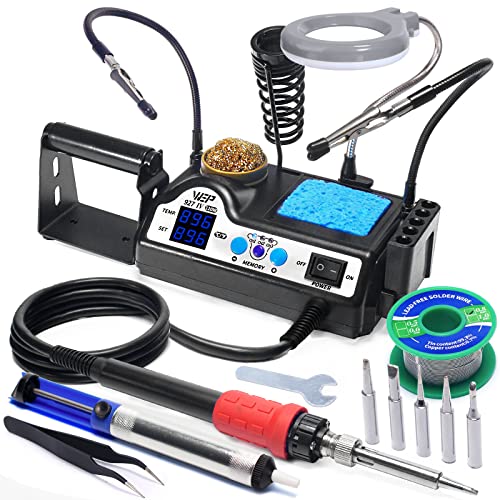
High-power 110W station with preset channels and an LED magnifier for fine work.
Best for: Frequent / detailed work
Learn how to build a robotic arm from scratch — the parts, degrees of freedom, wiring and code you need, plus a clear path from your first servo to a working 6-axis arm.
Builds by platformBuild a 4-DOF Arduino robotic arm with hobby servos. Full parts list, wiring diagram, power tips and copy-paste Arduino code to control it with potentiometers or serial commands.
Parts & hardwarePick the right robotic arm power supply, size current from servo stall draw, wire a common ground, and stop brownouts that reset your Arduino or Pi.